Shooting in the city on SNS: How to avoid infringement of portrait rights and specific examples

Contents
Contents
Getting started
Hello Shoton!
In this article, < on YouTube, Instagram, TikTok, etc. br />
When shooting videos to be uploaded to SNS in the city, here are some precautions to keep in mind so as not to infringe on the portrait rights of passers-by!
Here are specific examples of cases that do not infringe on portrait rights, the basics of portrait rights, and specific examples of how to take pictures safely even if passers-by are reflected.
What is portrait rights >
?1-1. Definition of Portrait Rights
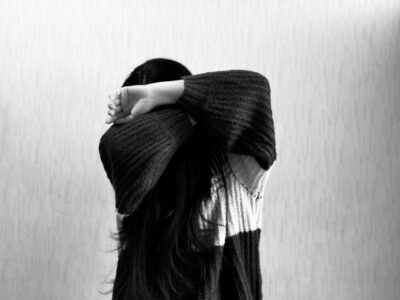
Portrait rights are the right not to photograph or publish one's face or appearance without permission.
There is no clear legal definition, but it is said to be derived from the right to pursue happiness based on the Constitution.
1-2. Claim for damages due to infringement of portrait rights
If portrait rights are infringed, you may be required to pay alimony.
This risk is especially heightened when filming or publishing in an identifiable way.
videos that pose a risk of infringing on portrait rights
2-1. Criteria for Infringement of Portrait Rights
If it islarge enough to identify an individual and clearly reflected, there is a risk of infringement of portrait rights.
On the other hand, it is unlikely to be an infringement of portrait rights just by being small in the background.
2-2. Cases of Infringement of Portrait Rights
A specific example is a case where a specific individual was photographed as a large photo without permission and published on a website.
In this case, it was recognized as an infringement of portrait rights because the photograph and publication that could identify the individual were carried out.
Specific examples of cases where portrait rights were not infringed
3-1. Cases that do not constitute infringement of portrait rights
Cases where an unspecified number of people are reflected: When many people are reflected at events or busy street corners, it is often difficult to identify individuals, so it is not an infringement of portrait rights.
If the individual cannot be identified: It is less likely to be a problem if the individual cannot be identified, such as if it was taken in a distant view or if the passerby is blurry.
3-2 Specific Examples
Landscape photography in tourist areas: When photographing scenery in tourist areas, even if there are many tourists in the background, it is difficult to identify individuals, so there is usually no problem of infringement of portrait rights.
Sporting events: Even if a large number of participants are reflected in a marathon, it is difficult to identify individuals, so it is generally not an infringement of portrait rights.
conditions that are relatively difficult to violate portrait rights
・Not capitalized so that the subject's appearance can be clearly seen
・It is not a normal behavior, such as the subject hugging the opposite sex, which you would normally not want others to see
・It was only a small reflection in the background
・The face is blurred and it is difficult to identify the individual
・It is reflected among an unspecified number of passers-by
What to do if a passerby is reflected >
If passers-by are inevitably reflected, it's important to film them so they can't be identified individually.
Editing (e.g., blurring the face) is also an effective method.

For example, we use motion blur (a function that blurs the subject with motion blur).
By using motion blur, even if you pause the video, it will be difficult to identify the faces of passersby.

summary
When shooting videos on YouTube, Instagram, TikTok, etc. in the city, it is necessary to take care to respect portrait rights.
It doesn't matter how passers-by reflect itself, it's how reflects it.
Shoot videos with proper shooting methods and editing to reduce risk.
Recommended article↓
[2023 Latest Edition] Top 100 Recent TikTok Trending Songs
[2023 Latest] How to Get Recommended Overseas on TikTok