Isn't iOS26's "Liquid Glass" like "Frutiger Aero"?

Hello,
"Pu ("Pu" is a half-width kana)".
(You don't have to pronounce the part of ("pu" is a half-width kana))
Suddenly, do you know iOS26?
iOS26 is a new OS developed by Apple, scheduled to be released in the fall of 2025.
It was shocking that the last two digits of the year of release were given to the name, unlike previous numbering.
The next iOS26 will be equipped with a new design called "Liquid Glass".
Personally, I believe that this design could be a major turning point that overturns the trend of previous designs.
This time, we will talk about "Liquid Glass" and the trends of design so far and
I would like to focus on and explain the similarities with "Aero" that was installed in the previous Windows.
Contents
Contents
Trends in design ~ From real to flat
To understand Liquid Glass, let's first look back at the history of Apple and digital design.
Skeomorphism Era (Three-dimensional and Realistic)
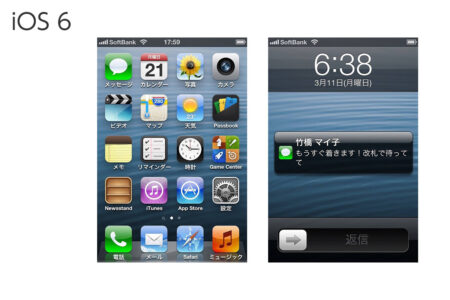
(Quote: https://news.mynavi.jp/article/iphone_kihon-500/)
When the iPhone was born (around iOS 1 to 6), designs were designed with an emphasis on three-dimensionality and materiality.
- It features realistic textures, such as the gloss of the lenses in the camera app and the realistic sunflowers in the photo app
- buttons and notification pop-ups have a raised sheen
Such designs are called skeuomorphism or rich design.
These are highly visible (for example, buttons, slides, and other "touch-to-operate" parts are decorated with three-dimensional decorations) and are easy for users to operate intuitively, so they were familiar to many users as a standard design until iOS7.
The Rise of Flat Design (iOS7~)
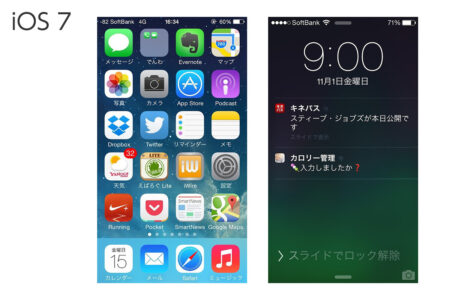
(Quote: https://news.mynavi.jp/article/iphone_kihon-500/)
In 2013, iOS 7 made major changes to the UI that had been popular until now.
- flat design that eliminates the feeling of material
- Solid color or minimal gradient is used
The flat design was a flat design that completely abandoned the three-dimensional sense of the past and aimed for "information organization" and "minimalism".
Google's Material Design and Microsoft's Metro UI also adopted a flat design following Apple's lead.
while some people rated these designs as simple and sleek designs,
Complaints such as "the design has become cheap" and "the buttons are difficult to understand" were also raised everywhere.
The Revival of Pneumorphism and Texture
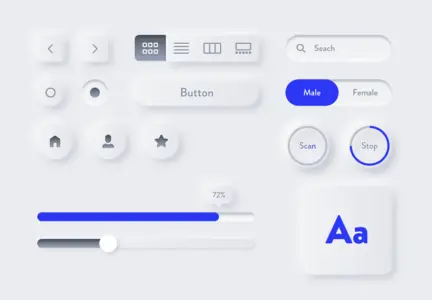
Pneumorphism
(Quote: https://fastcoding.jp/blog/all/info/neumorphism/)
In recent years, the following designs have evolved from completely flat designs to be found everywhere:
- Pneumorphism
- Glass Morphism
- Subtle gloss and bokeh
In this way, designs that are not completely flat but have a slight sense of material have gradually emerged.
What is Liquid Glass?
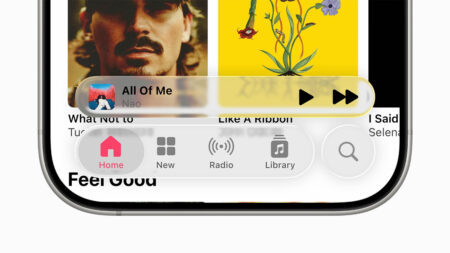 (quote:
 In this trend, iOS 26's Liquid Glass is attracting attention.
As the name suggests, it has a design that is reminiscent of a texture that is "smooth as liquid and crystal clear like glass".
Liquid Glass features:
- A subtle movement that reflects the background like glass, and the transmitted part shimmers like a liquid
- Color and brightness change depending on how light hits it.
- visual effects that blend UI parts into each other
In other words, it is not just translucent, but The point of Liquid Glass is the glass feel that realistically reproduces movement and texture.
Is Liquid Glass similar to Windows Aero?
By the way, isn't Liquid Glass similar to "Aero" from the Windows Vista/7 era?
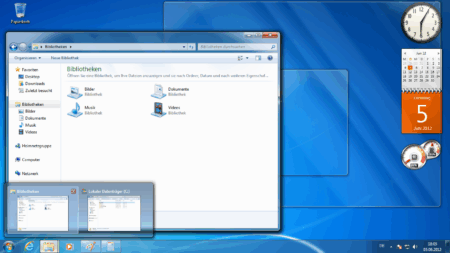 (Quote: https://de.wikipedia.org/wiki/Windows_Aero)
Windows Aero Features
- glass-like crystal clear window
- Blur effect that faintly shows the background
- Creates a glass feel with light reflections
In this way, the Aero attracted attention for its beautiful textures, but it seems that the evaluation was not very good at the time.
The main reason for this was not the design aspect, but the fact that the technology did not keep up with the elaborate design.
Especially in the days of Vista, the innovative design actually caused system instability, and even after the sale of Vista, there were many users who used the previous generation XP, which had excellent stability.
Differences and evolution from Liquid Glass
Liquid Glass is also designed to take advantage of transparency like Aero, but it is much more advanced in terms of design and functionality than it was a decade ago.
Smooth movement
The effect of Aero was basically stationary, while Liquid Glass is said to have fluctuations and fluid motion.
The evolution of processing power
At that time, Aero could only run satisfactorily on PCs with excellent functionality. However, today's smartphones have advanced processing power and will be able to withstand the motion of Liquid Glass.
Collaboration with AI
It is believed that Liquid Glass may automatically adjust color and clarity depending on the user's environment and time of day. This is a next-generation part that Aero didn't have.
In other words, Liquid Glass feels like a re-challenge to regain "texture" in which is full of flat design.
summary
what did you think?
Ihope Liquid Glass runs beautifully on my iPhone 14 pro max as well.